Stucco Resurfacing in Little Rock, AR
When a wall has more patches than original finish, we resurface stucco on homes and commercial buildings in Little Rock, AR: we repair the bad spots, prepare the whole surface, and apply one new finish coat so the wall looks even again and is easier to keep sealed.
Call for a free estimate: (501) 235-6768Ask for a free estimate
Give us a name and a phone number. Anything else you add helps us come out ready.
- Flat upfront pricing
- Insured
- Free estimates
- We sweep up before we leave
What is stucco resurfacing?
Resurfacing is a new finish coat applied over an existing stucco wall that is still solid underneath. It is not tearing off the wall and starting over. The old base coats stay. We fix what is broken, clean and prepare the surface, then trowel or spray a fresh finish across the full wall or elevation.
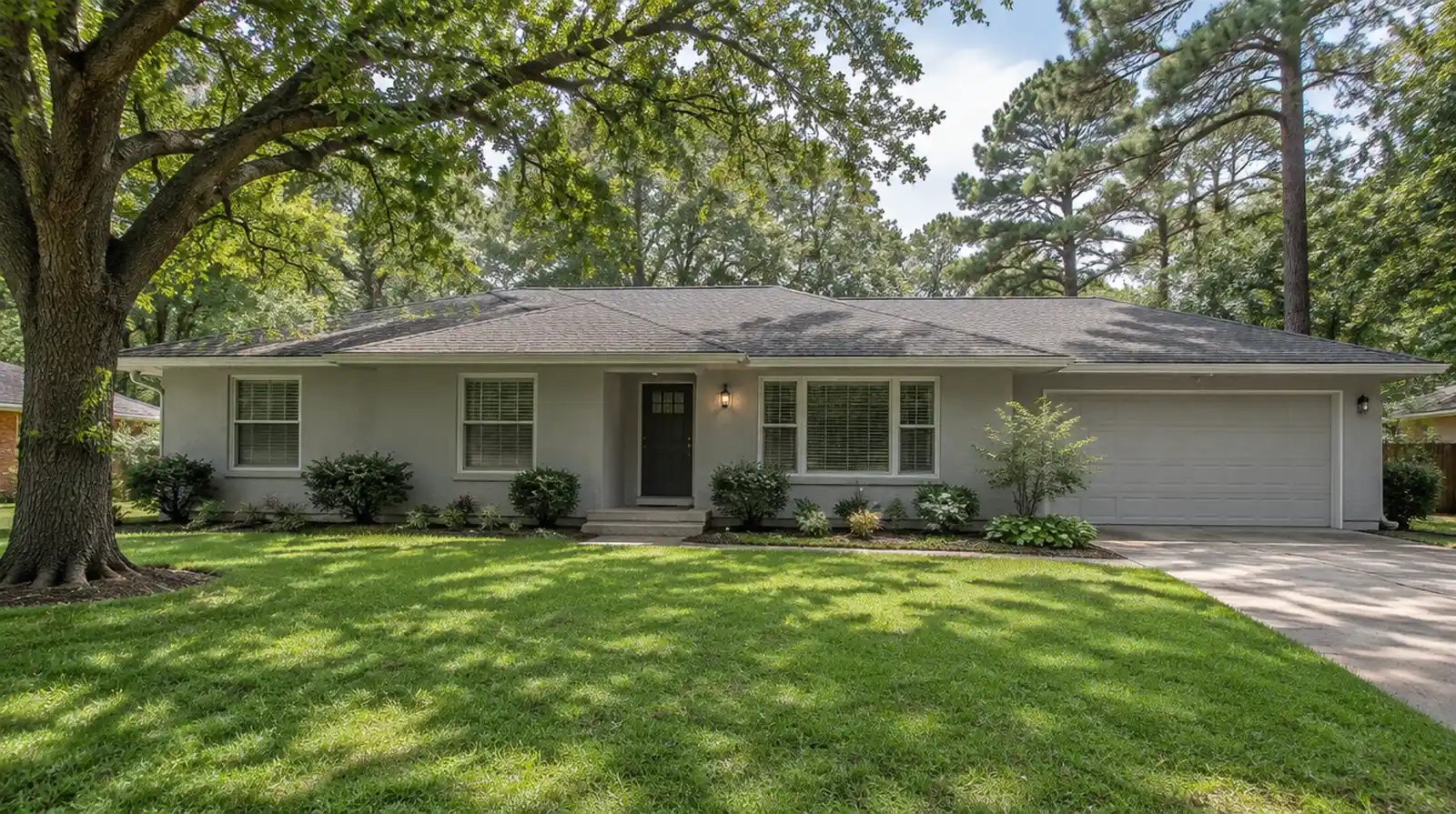
The result is one consistent texture and color, without the outlines of a dozen old repairs. It is the stucco version of refinishing a hardwood floor instead of replacing it.
Signs a wall is ready for resurfacing
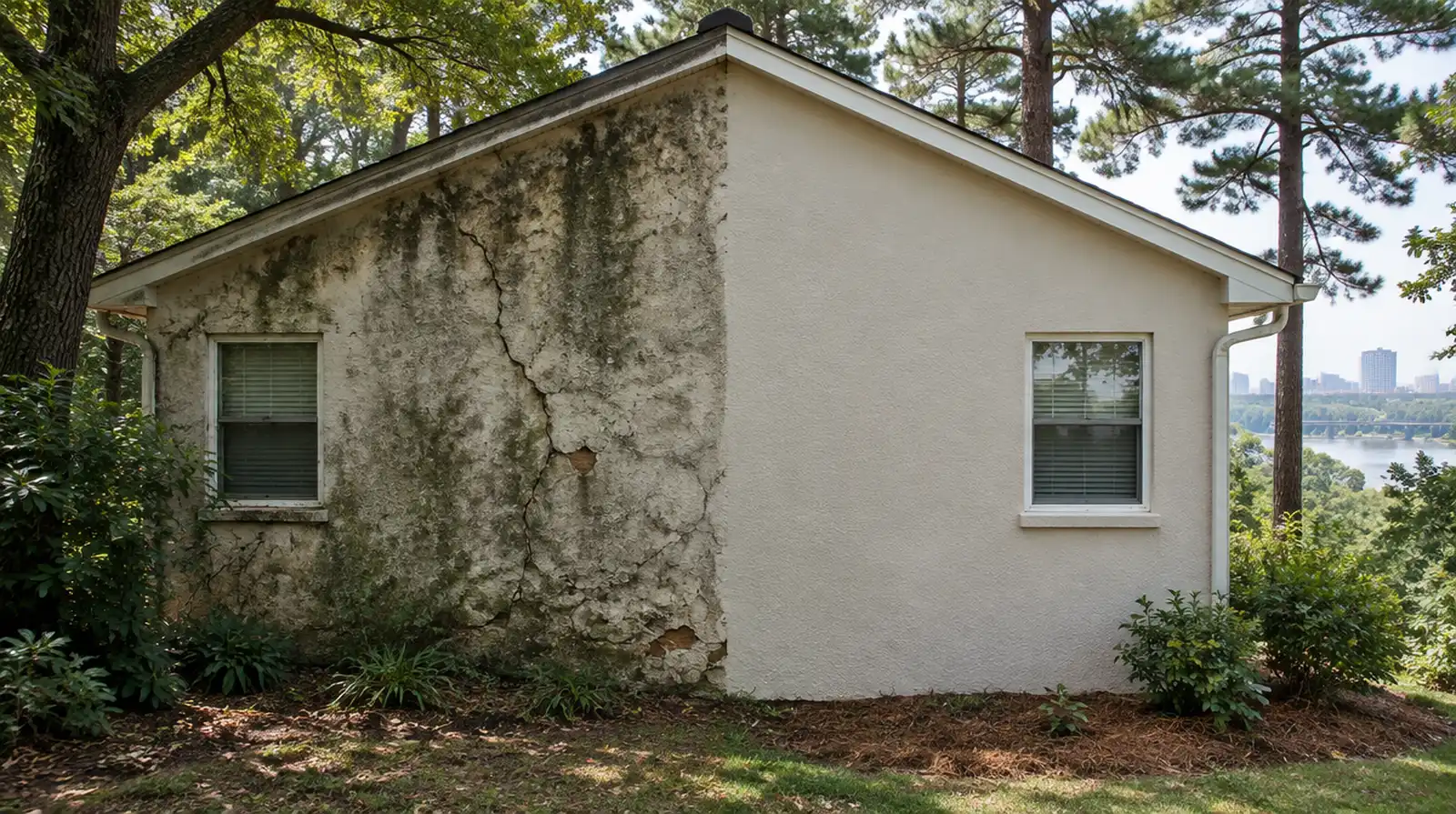
- Spider-web hairline cracks across a large area, not just one or two lines.
- Visible patches in slightly different colors or textures from past repairs.
- Chalky, faded or blotchy color, especially on walls that take afternoon sun.
- Paint that is peeling off stucco, often from coats that trapped moisture.
- Dirt, mildew and algae stains that come back every spring no matter how often the wall is washed.
If you see these signs but also see soft spots, bulging or wide cracks, the wall likely needs deeper repairs to damaged stucco first. Resurfacing goes over a sound wall, never a failing one.
Why do stucco walls wear out?
The finish coat is the part that faces the weather every day. Our humid summers keep it damp for long stretches, which feeds mildew and algae on shaded north walls. Hot sun breaks down pigments and older paints, and repeated wet-dry cycles open fine cracks in the surface.
Patching makes it worse over time, because each repair is done with slightly different material in slightly different weather. After ten or fifteen years the wall looks like a map.
How does the resurfacing process work?
1. Inspect and repair
We tap the wall, check for moisture, and cut out any loose or cracked sections. Those get rebuilt before anything else happens.
2. Clean and prep
We wash off dirt and mildew, remove failing paint, and apply a bonding primer or base as the surface requires. Windows, doors, trim and plants are covered.
3. Apply the new finish
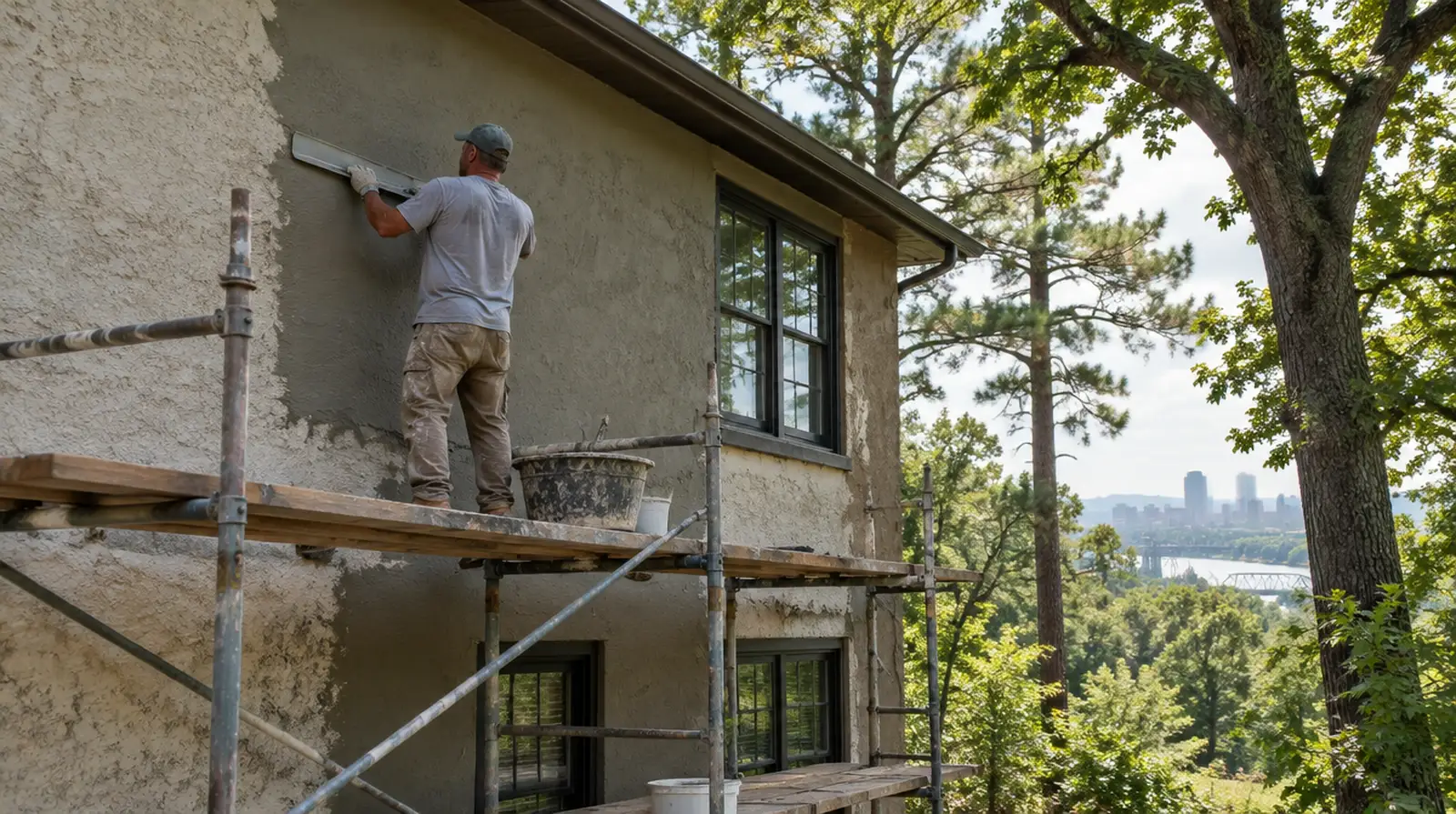
We apply the finish coat in one continuous pass per wall section so there are no lap lines. Texture is chosen with you: smooth, sand, light dash or another style that fits the building.
4. Cure and clean up
The finish needs dry weather to cure. We schedule around rain and haul off all debris when the job is done.
What affects the cost of resurfacing?
- Total wall area being covered.
- How much repair is needed first. A wall full of loose patches costs more to prep.
- Number of stories and whether scaffolding is needed.
- Finish type. Acrylic and elastomeric finishes cost more than cement-based ones but resist hairline cracking better.
- Trim, windows and details that need careful masking or rebuilding.
Resurfacing or a new stucco system?
Most walls do not need replacement. If the base coats are attached and dry, resurfacing gives you a like-new look for much less. Replacement is only on the table when large areas are delaminating, the lath has rusted through, or water has damaged the sheathing behind big sections. We check for that before recommending anything, and if a section does need full removal, we will show you why.
Questions people ask us
Can you change the texture when resurfacing?
Usually yes. Going from a heavy texture to a smoother one may take an extra coat, which we would include in the price.
Is resurfacing the same as painting?
No. Paint is a thin film. Resurfacing is a new layer of stucco finish that fills fine cracks and evens the texture. It can be tinted so it needs no paint.
How long does resurfacing last?
With dry walls underneath and good sealant at windows and joints, a new finish coat should last many years. Keeping gutters and sprinklers off the wall helps.
Can you resurface just one side of the building?
Yes. Doing one full elevation at a time is common and keeps the color even within that wall.
Find out if your wall is a good fit for resurfacing
Call or send us a photo through the form. We will look at the wall in person and tell you honestly whether resurfacing will work, with a flat-price estimate.
Call (501) 235-6768