Water-Damaged Stucco Repair in Little Rock, AR
Dark streaks below a window, bubbling paint, or stucco that feels soft are signs water has gotten behind the wall. We repair water-damaged stucco on homes and commercial buildings in Little Rock, AR by finding the leak, removing wet and rotted material, and rebuilding the wall so it stays dry.
Call for a free estimate: (501) 235-6768Ask for a free estimate
Give us a name and a phone number. Anything else you add helps us come out ready.
- Flat upfront pricing
- Insured
- Free estimates
- We sweep up before we leave
What is water-damaged stucco repair?
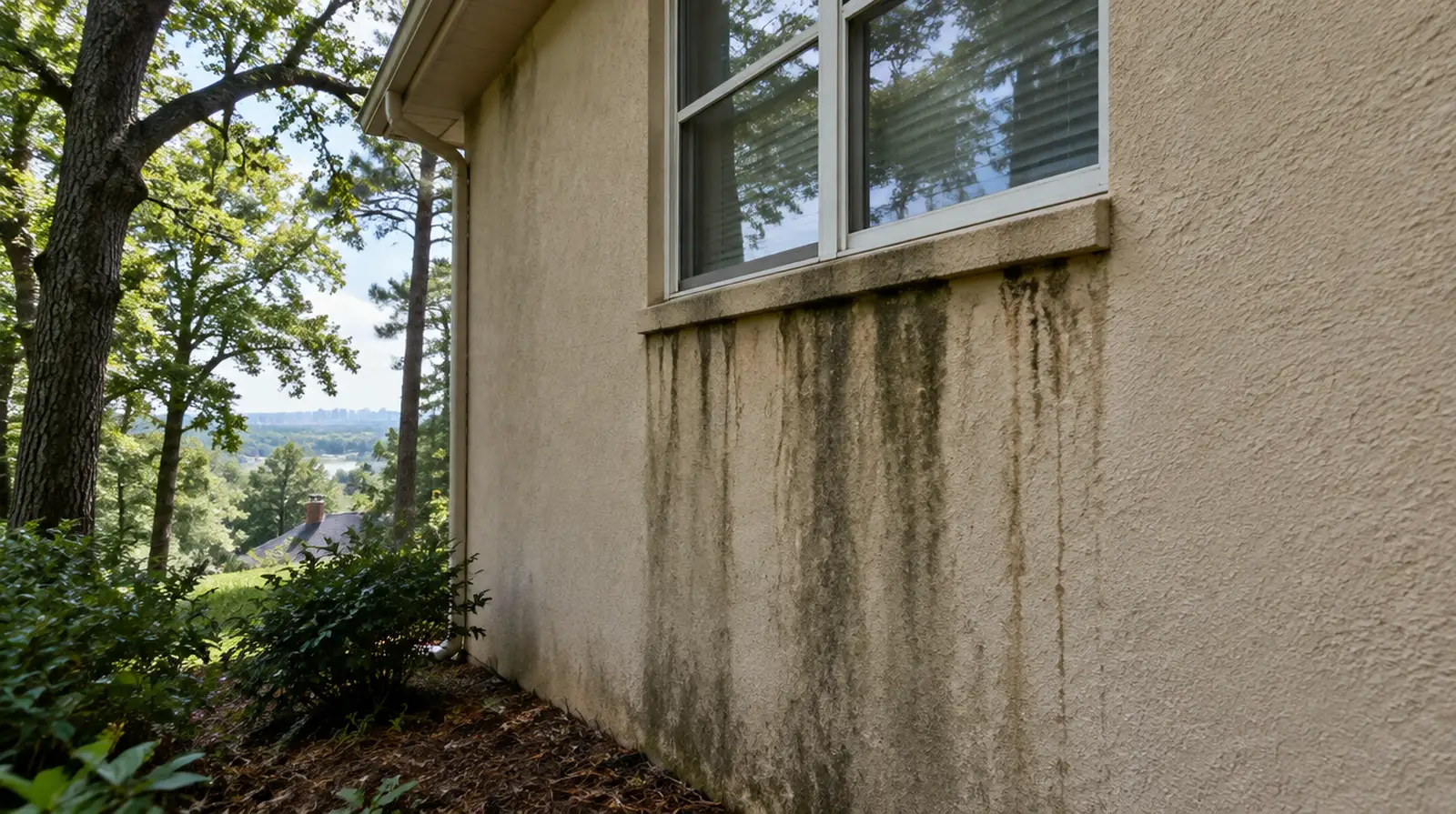
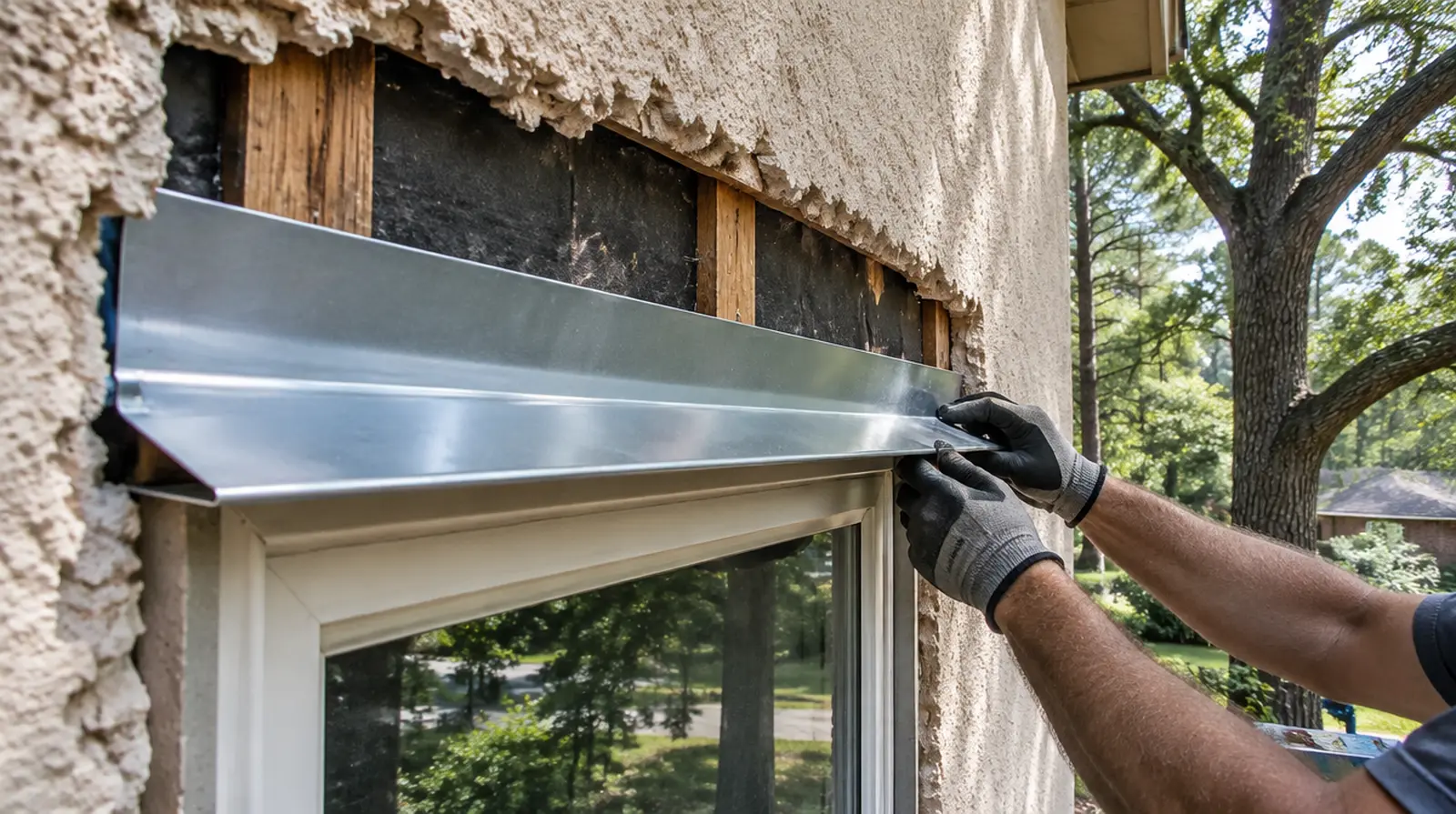
This is the repair of stucco and the wall behind it after water has been getting in. It starts with finding the entry point: a failed window seal, a missing kickout flashing, a cracked sill, or a gap at a light fixture. Then we open the wall where readings and probing show moisture, remove soft stucco and any damaged paper, lath or sheathing, let the area dry, and rebuild it with proper flashing and new stucco coats.
A repair that only replaces the outer finish leaves the source in place, so the same stain shows up again within a year or two.
How can you tell stucco has water damage?
- Dark or rust-colored streaks below windows, light fixtures or roof edges.
- Bubbling, blistering or peeling paint on the stucco.
- Soft or crumbly stucco that gives when pushed.
- White powdery deposits called efflorescence, left as water dries out of the wall.
- Musty smells, mold or swollen trim on the inside of the same wall.
- Cracks that stay dark for days after a rain.
Why does water get behind stucco?
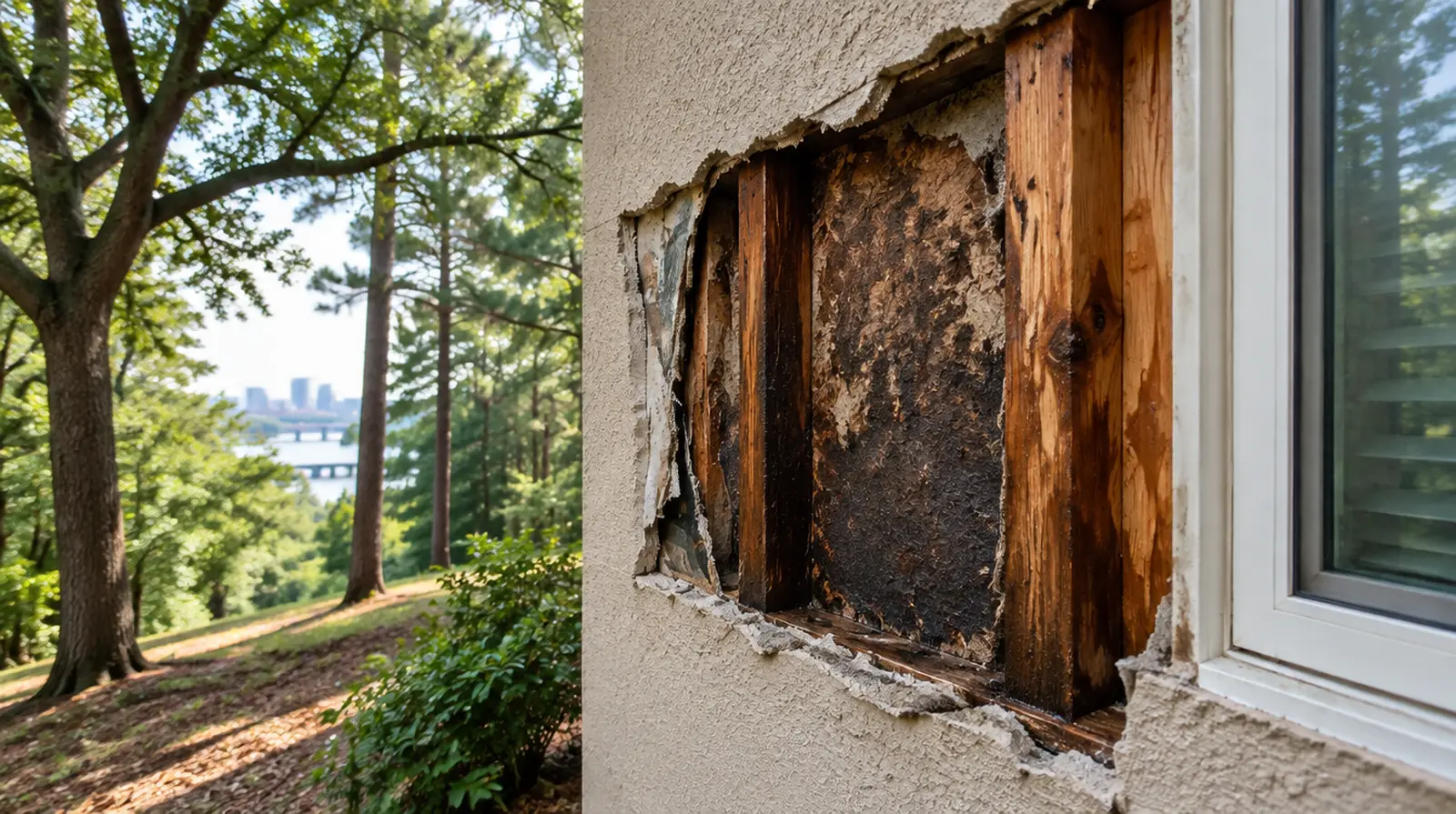
Stucco is not waterproof on its own. It relies on paper or wrap behind it, on flashing at every opening, and on sealant joints staying intact. When any one of those fails, water that soaks into the stucco cannot drain out.
Our climate gives water plenty of chances. Spring storms drive rain sideways against walls, summers are humid, and a wet fall can keep walls damp for weeks. Irrigation heads aimed at the house, gutters that overflow onto a wall, and soil or mulch piled above the bottom edge of the stucco all add to the problem.
Older walls in the city often have no weep screed at the bottom, and many houses had windows replaced without proper flashing tied into the stucco. Those are two of the most common sources we find.
What happens if water damage is not fixed?
Water damage behind stucco does not stop by itself. Wet sheathing rots, framing can soften, metal lath rusts and pushes stucco off the wall, and mold grows in the cavity. The longer it goes, the bigger the section we have to open and the more it costs. On commercial buildings, it can also mean tenant complaints, interior drywall damage and failed inspections.
What affects the cost of water damage repair?
- How far the moisture has spread inside the wall, which we map with meter readings and probing.
- What needs replacing: stucco only, or also paper, lath and sheathing.
- Flashing and sealant work at windows, doors, rooflines and penetrations.
- Height and access.
- Finish matching once the section is rebuilt.
Framing or interior work beyond the sheathing is outside our trade. If we find it, we will show you and recommend the right contractor.
Repair the damaged section or replace the wall?
Most water damage is local to one or two openings. Cutting out and rebuilding those areas, with new flashing, fixes the problem for a fraction of a full re-stucco. If we find moisture across most of a wall, or the wall was built with no drainage plane at all, a larger replacement may be the smarter long-term spend. On foam-backed walls, see our EIFS moisture repair page, since those systems fail differently.
Questions people ask us
Can you test for moisture before opening the wall?
Yes. We use a moisture meter and small probe holes at suspect spots, then seal them. That tells us where to open and where not to.
Will my homeowners insurance cover this?
Sudden damage sometimes is. Long-term leaks usually are not. We can document what we find for your adjuster.
How long does the wall need to dry?
It depends on how wet it is and the weather. We do not close up a wall until it reads dry.
Do you fix the window leak too?
We fix the flashing and sealant where the window meets the stucco. A failed window unit itself may need a window contractor.
Stop the water before the damage grows
Call us or send photos of the stains through the form. We will find where the water is coming in and give you a free, flat-price repair estimate.
Call (501) 235-6768